Dental Implants in Mexico: What U.S. Patients Really Pay
See the real costs U.S. patients pay for dental implants in Mexico—fees, travel, and savings.
By Globalcare Team29 min read
In this article
Before You Book Anything: Three Steps That Matter
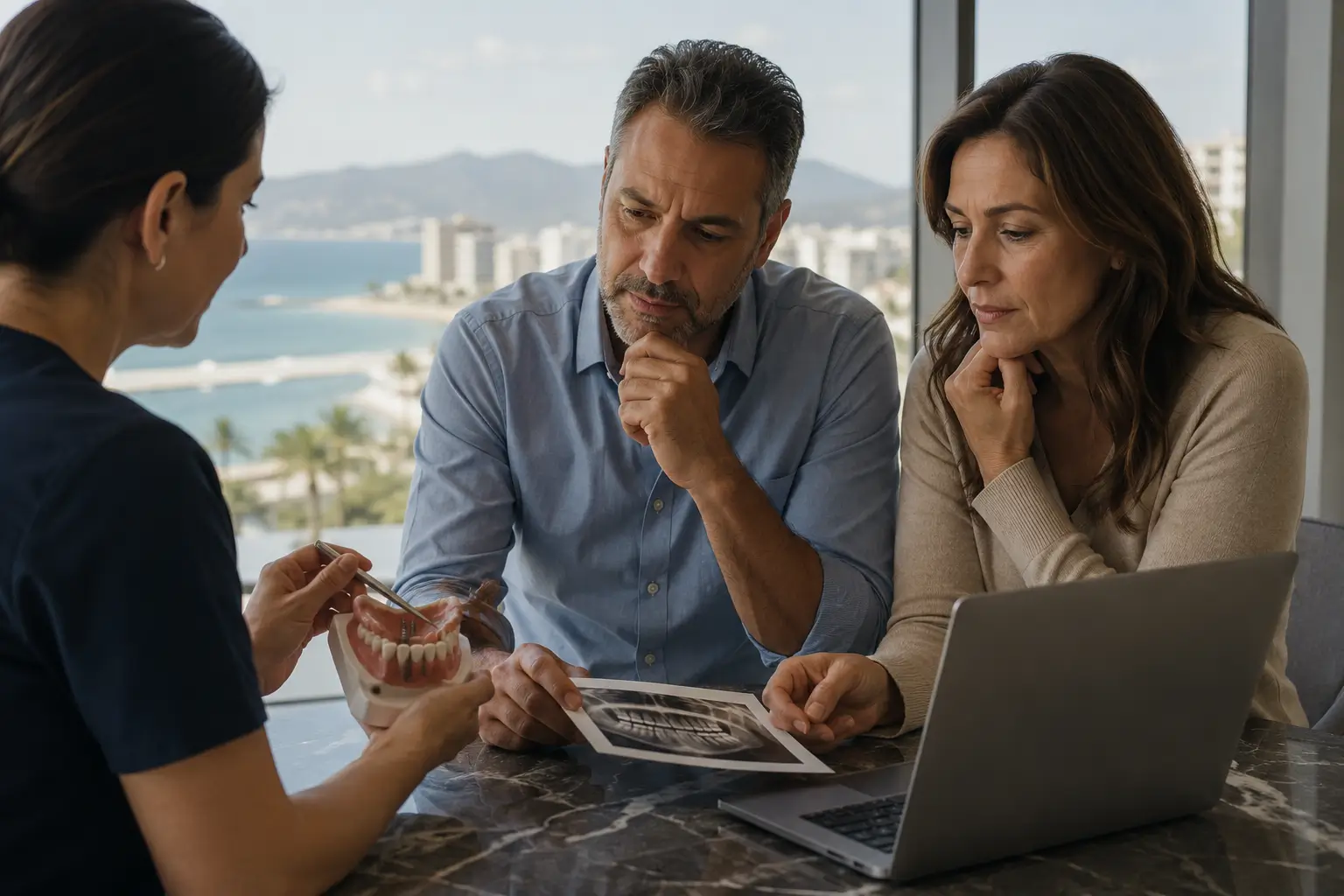
Here's what separates patients who save thousands from those who end up frustrated: documentation. Cross-border dental care can be a smart financial move, but only when you know exactly what you're paying for. Skimp on the paperwork, and hidden costs tend to show up later—extra trips, surprise fees, or warranty headaches that eat into your savings.
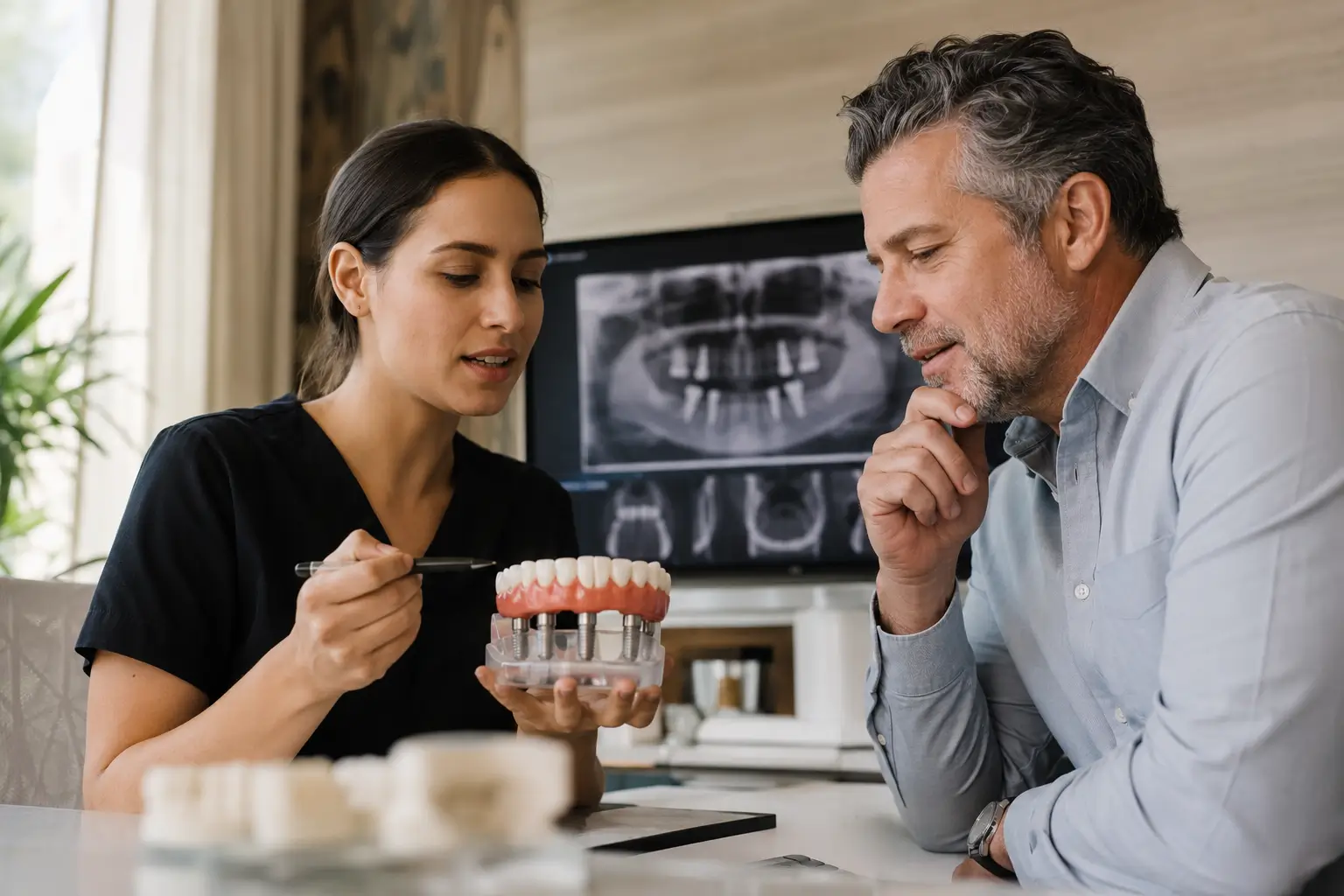
Step one: Make clinics put it in writing. You need a dated, itemized PDF that spells out every component: the implant system (Straumann, Nobel Biocare, MIS, or another brand), the abutment, crown or bridge material (zirconia, PFM, or acrylic), CBCT imaging and x-rays, temporaries, sedation options, bone grafting, extractions, and lab fees. If a clinic can't produce this document, you simply can't compare their price to anything else.
Step two: Be honest about travel. Most single-implant cases require two trips, separated by several months of healing. Full-arch restorations like All-on-4[2] typically mean two to three visits spread over half a year or more. Your savings are only "real" once you've added up flights (or driving costs), hotels, meals, time away from work, and at least one buffer trip for the unexpected.
Step three: Treat the warranty like a cost. A trustworthy clinic will give you a written warranty that explains exactly what's covered (implant fixture, crown, labor), what's excluded, how long the coverage lasts, and how to file a claim from the U.S. Vague assurances like "just message us if something goes wrong" aren't a plan—they're a risk.
This guide is built around those three priorities: getting clear prices, understanding your real travel commitment, and protecting yourself with proper documentation.
Is Getting Dental Implants in Mexico Right for You?
When you're looking at a $4,000 to $6,000 quote for a single implant in the U.S.—or $25,000 or more for full-arch work[3]—it's natural to wonder if there's a smarter way. Mexico appeals to so many American patients because clinics there often charge considerably less for the same high-quality materials and techniques. But the real question isn't whether Mexico is cheaper on paper. It's whether Mexico is cheaper after you account for getting there, staying there, and coming back when needed.
The math tends to work in your favor if you need substantial restorative work (think multiple implants or a full arch), you can realistically travel at least twice, and you're comfortable doing your homework on materials, credentials, and timelines.
On the other hand, you might be better served staying local if you have complex medical conditions that need close monitoring—poorly controlled diabetes, recent heart events, or immunosuppressive therapy, for example—or if you need treatment urgently and can't plan around multiple trips.
| Factor | Mexico | U.S. | What This Means for You |
|---|---|---|---|
| Price (single implant + crown) | $950–$2,000 | $3,500–$5,500+ | Potential savings of $1,500–$3,500 per tooth before travel |
| Number of trips | 2 visits typical; 2–3 for full-arch | 3 to 5 visits plus local follow-ups | Can you comfortably travel more than once? |
| Follow-up care | May require return travel for adjustments | Local access | Plan how you'll handle repairs or adjustments |
| Emergency access | Limited once you're home | Immediate | Complex cases may benefit from a U.S. safety net |
| Verification effort | More homework on you | Easier to verify locally | Be ready to request and confirm documents |
How Prices Actually Compare: Mexico vs. the U.S.
Part of why implant quotes feel so confusing is that "implant cost" isn't really one thing. In the U.S., many dental offices roll the implant, abutment, crown, imaging, sedation, and follow-ups into a single number. In Mexico, some clinics do the same bundling while others quote surgical placement alone, then add the crown and extras separately. The only honest comparison is component by component: same materials, same steps.
| Procedure | Common Brands/Materials | Typical Add-ons (often separate) | Mexico (Typical) | U.S. (Typical) |
|---|---|---|---|---|
| Single implant + zirconia crown | Straumann / Nobel Biocare / MIS + zirconia | CBCT, x-rays, grafting, sedation, temporary | $1,200–$2,100 | $4,000–$6,000+ |
| All-on-4 (per arch, fixed) | Straumann / Nobel Biocare + acrylic or zirconia bridge | Tooth extractions, IV sedation, premium final bridge | $9,000–$16,000 | $28,000–$45,000 |
| Mini dental implants (per implant) | Mini implant systems + denture stabilization | Relines, new dentures, imaging | $600–$1,000 | $500–$1,616 |
Prices verified February 2026. Ranges vary based on materials, additional procedures, lab choices, and whether temporaries are included. Individual quotes may fall outside these ranges depending on case complexity.
Note: Mini implants show overlapping price ranges between countries—U.S. entry-level pricing can actually be lower than Mexico in some cases. Mini implants are already relatively affordable in the U.S. compared to standard implants, so your savings calculation matters most for standard implants and full-arch work.
How to Spot Missing Costs in a Dental Implant Quote
Think of the price table above as your "missing details detector." When a clinic's quote comes in dramatically lower than these ranges, it usually means something was left out—not that you've found a miracle deal. Here's what to watch for: Is the implant brand actually specified, or does it just say "titanium implant"? Is the abutment included and named? What material is the crown—zirconia costs more than PFM or acrylic. Are CBCT imaging and x-rays part of the package, or will you pay extra? For full-arch cases, are temporaries included?
A quick example makes this concrete: If your U.S. dentist quotes "implant + zirconia crown" but a Mexico clinic says "implant $900," you don't have a real comparison yet. You need to ask whether that $900 covers the abutment, crown, CBCT, and lab fees—and get the crown material in writing before you can compare.
One more consideration: Ask whether the implant system used is also available in the U.S. Major brands like Straumann, Nobel Biocare, and MIS have U.S. distribution, which means a U.S. dentist can obtain replacement parts or compatible components if you need future maintenance. Lesser-known systems may work fine but could complicate follow-up care at home.
Calculating Your Real Dental Tourism Savings
Here's a straightforward way to build a reliable estimate without spending hours on research. Start with your U.S. baseline—the itemized quote you already have (or can request) for the same procedure and materials. Then add clinical extras that might apply: bone grafting, sinus lift, tooth extraction, sedation, CBCT, temporary teeth.
Next, calculate your travel costs per visit: flights or gas, hotel nights, meals, local transport, and one buffer day. Set your expected trip count—most single implants mean two trips; full-arch work is typically two to three.
What you end up with: an estimated Mexico total, an estimated travel total, and your net savings compared to U.S. prices.
| Line Item | U.S. Cost | Mexico Cost |
|---|---|---|
| Implant + abutment | $2,400 | $800 |
| Crown (zirconia) | $1,600 | $450 |
| CBCT / imaging | $250 | $120 |
| Grafting (if needed) | $500 | $250 |
| Travel + hotel + meals (per visit) | N/A | $600 |
| Total | $4,750 | $2,220 |
One more step helps you avoid false confidence: run a sensitivity check. Recalculate assuming one extra trip and one upgrade (say, zirconia instead of acrylic for a full-arch bridge). If your savings still look solid after that stress test, your decision is on firmer ground.
For major work like full mouth restorations, savings usually scale up because procedure costs diverge more sharply than travel costs. For a single tooth, travel can eat a bigger chunk of what you're saving—so your math depends heavily on how far you are from the border, how many trips you'll need, and whether warranty work might require returning.
What Dental Implants Cost City by City in Mexico
Prices aren't uniform across Mexico. They vary by city, by how a clinic positions itself (budget versus premium), by the implant system used, by lab quality, and by what's actually bundled into the quote. Use these ranges as a starting point for planning, then confirm your specific numbers with a dated, itemized quote.
Tijuana[17] pricing can vary widely by clinic and what's included, but many quotes for a single implant + crown land around $750 to $1,200.
For full-arch cases, All-on-4 & All-on-6[18] packages in Tijuana are often quoted in the $8,500 to $11,000 range, depending on materials and what the clinic bundles into the treatment plan.
| City/Region | Single Implant + Crown | Full Arch (All-on-4/6) | Notes |
|---|---|---|---|
| Tijuana | $750 to $1,200 | $8,500 to $11,000 | Popular for quick follow-ups from Southern California |
| Los Algodones (Molar City) | $1,000–$1,700 | $8,000–$13,500 | High clinic density; walkable "dental town" near Arizona border |
| Ciudad Juárez | $950–$1,650 | $7,800–$12,500 | Easy comparison to El Paso pricing; short border crossing |
| Cancún | $1,300–$2,100 | $9,500–$16,000 | Direct flights from most U.S. cities; resort-style recovery |
| Mexico City | $1,150–$1,950 | $9,000–$15,500 | Large specialist market; strong lab access |
| Guadalajara | $850–$1,600 | $7,500–$12,800 | Lower prices via teaching clinics; potentially slower timelines |
| Puerto Vallarta | $1,250–$2,050 | $9,000–$15,500 | Established network of clinics experienced with U.S. patients; convenient international flights |
| Los Cabos | $1,400–$2,300 | $10,000–$17,500 | Often positioned as premium/concierge experience |
A note about border comparisons: Many patients specifically weigh El Paso against Juárez. While exact numbers depend on the clinic and what's included, it's common to see a 2x to 4x difference for the same single implant + crown when comparing a full U.S. specialist fee to a Juárez clinic package—and that's before you factor in travel. The key is requesting itemized PDFs from both sides and making sure you're comparing the same abutment, crown materials, and imaging.
A caution on full-arch pricing: Before you compare full-arch numbers, have the clinic spell out exactly what you're getting. Is this quote for a fixed bridge (the classic "All-on-4") or a removable overdenture? How many implants are included? What material is the final restoration? This is the area where misunderstandings get expensive fast.
Picking the Right City for Your Dental Treatment
Where you go shapes both your costs and how manageable the entire experience feels. Some patients prioritize convenience—they want easy follow-ups if something needs adjusting. Others care more about comfort during recovery and are willing to travel farther for the right environment.
Think of your city choice as a logistics decision as much as a dental one.
Tijuana makes the most sense for Southern California residents who value quick border access and can easily pop back for a follow-up.
Cancún works well if you want direct flights from most U.S. cities and don't mind combining treatment with a vacation-style recovery.
Los Cabos draws patients who want upscale clinics with concierge-style coordination.
Puerto Vallarta offers an established network of clinics experienced with U.S. patients and convenient international flight options.
Los Algodones—often called Molar City—attracts thousands of patients annually, including many Canadian visitors who drive down during winter months.
If easy follow-up access tops your list, border cities usually win. If comfort, lodging options, and a "recovery trip" atmosphere matter more—and you can handle the travel—resort destinations become more attractive.
A Quick Dental Tourism City Comparison
Before you start requesting quotes from multiple clinics, do a city-level screen so you're not wasting time evaluating places that don't fit your situation.
Score each city from 1 to 5 based on your personal constraints: how much time you can take off work, flight availability from where you live, your lodging budget, and how willing you are to return for adjustments.
| City | Travel Time (from you) | Turnaround Speed | Recovery Comfort | Ease of Return |
|---|---|---|---|---|
| Tijuana | Your rating: __ | Your rating: __ | Your rating: __ | Your rating: __ |
| Los Algodones (Molar City) | Your rating: __ | Your rating: __ | Your rating: __ | Your rating: __ |
| Cancún | Your rating: __ | Your rating: __ | Your rating: __ | Your rating: __ |
| Puerto Vallarta | Your rating: __ | Your rating: __ | Your rating: __ | Your rating: __ |
Once two cities clearly score higher than the rest, focus your outreach there and save yourself the decision fatigue.
What Real Patients Actually Spent on Dental Work in Mexico
Numbers in a table are helpful, but seeing what the process looked like for actual people can set more realistic expectations. These cases show both the savings and the tradeoffs—your experience will depend on your own clinical situation, travel logistics, and the clinic you choose. When you're talking to a clinic, ask if they can share patient reviews or testimonials from recent comparable cases (with dated documentation) so you can judge what "typical" really means.
Patricia, 58 (Cancún, August 2025): Patricia needed full-arch fixed All-on-4 work. She flew from Denver and spent about $11,900 total, including flights, lodging, and two trips five months apart. Her U.S. quote had been $31,000[4]. The cost drivers in her case were bone grafting at the first visit plus an upgrade to a higher-aesthetic temporary. She needed a minor bite adjustment on trip two, handled smoothly with no warranty claim required.
Mark, 53 (Guadalajara, November 2025): Mark replaced a single lower molar through a teaching-clinic pathway. His all-in cost was about $1,150 (procedure plus local lodging). His U.S. dentist had quoted $4,200[5]. The tradeoff: slower lab turnaround and extra check-ins because of the school's scheduling. His crown seating required a second adjustment, but it was handled during the same trip window.
Sophia, 60 (Los Cabos, March 2026): Sophia chose a concierge-style clinic for full-arch fixed All-on-6. Her total came to about $14,600, including upgraded lodging and private transport. The U.S. specialist had quoted $34,000[6]. She opted for sedation and a premium temporary bridge. She had one remote video check-in at day 10, then returned for trip two when her final bridge was ready.
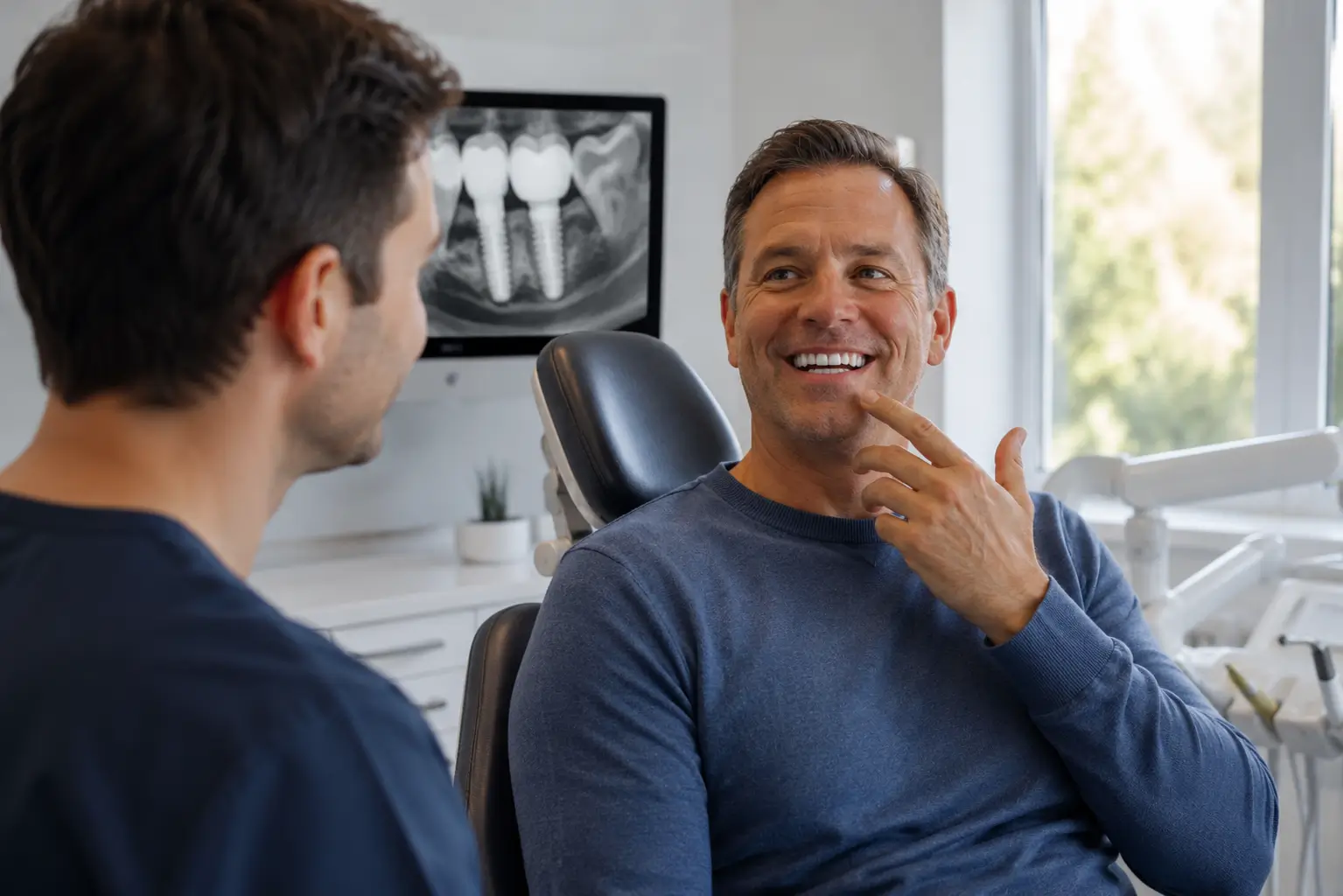
Aaron, 45 (Tijuana, January 2026): Aaron needed a single implant with a zirconia crown. He drove from Orange County and spent about $2,050, including two short trips and local transport. His U.S. quote was $5,400. It was a straightforward case with healthy bone. He came back once for a quick bite adjustment—the advantage of being close to the border.
Lena, 50 (Ciudad Juárez, September 2025): Lena needed two implants and compared El Paso versus Juárez after getting a $10,800 U.S. estimate. Her Juárez total was about $4,900, including imaging and two trips. She needed one extraction and grafting at one site. A post-op antibiotic change was coordinated by phone with no further complications.
Across cases like these, smoother outcomes consistently came down to two things: getting clear documentation upfront and planning realistically for travel, healing, and follow-ups.
Understanding the Different Implant Procedures
| Procedure | Typical Steps | Visits Needed | Main Cost Drivers |
|---|---|---|---|
| Single Implant + Crown | CBCT scan → implant placement → healing → abutment + final crown | Usually 2 (3–6 months apart, though healing varies) | Bone grafting, crown material, abutment type, sedation |
| All-on-4 / All-on-6 (Full Arch) | Exams/CBCT → extractions (if needed) → implants → temporary bridge → final bridge | Typically 2–3 (over 4–9 months, depending on healing) | Implant count, temporary vs. final bridge, acrylic vs. zirconia, IV sedation |
| Mini Dental Implants | Placement → denture stabilization (often same-day) → adjustments | 2–3 visits | New dentures needed, relines, bone-quality limitations |
| Bridge or Crown (non-implant) | Tooth prep → impressions/scan → crown/bridge delivery | Often 1–2 | Material choice, lab fees, adjacent teeth treatment |
Two clinical factors can significantly shift both your costs and your travel schedule.
Immediate versus delayed loading: Some cases allow a temporary tooth or bridge shortly after surgery; others require longer healing before any load can be placed on the implant.
A proper care plan should tell you exactly what you'll leave with after your first trip.
Staged grafting: If you need bone grafting before implant placement (common when there's significant bone loss), that could add months and possibly an extra trip. Budget for it even if you're hoping you won't need it.
The basics of candidacy still apply no matter where you have treatment. If your diabetes is well controlled, you don't smoke, and your bone levels are adequate, Mexico can work well for both single-tooth and multi-tooth implant work.
That said, even well-managed diabetes carries some additional risk for implant complications, and smoking substantially increases the chance of implant failure—your dentist should discuss these factors with you. If you have higher medical complexity—poorly controlled diabetes, you're taking bisphosphonates for osteoporosis, or you're on immunosuppressive therapy—plan for additional medical clearance and think carefully about whether having a U.S.-based healthcare safety net makes more sense.
The PACE Framework: Verify Before You Pay
If you want a single system that dramatically reduces your risk, use PACE. It zeroes in on the four areas where dental tourism most often goes sideways: unclear pricing, unverifiable credentials, vague timelines, and gaps in aftercare planning.
Price Transparency for Dental Services
This isn't about finding the advertised price—it's about knowing what you'll actually pay for your exact materials and steps. Request a dated, itemized PDF quote listing the implant system, abutment, crown or bridge material, imaging, temporaries, sedation, extractions, grafting, and follow-ups. If a clinic can share a redacted sample invoice from a similar case—with a date stamp—that's one of the fastest ways to confirm the price is real and current.
Accreditation and Credentials
You're not trying to "catch" anyone—you're simply confirming legitimacy before any money changes hands. Ask for the treating dentist's full name and license number, the clinic's operating license, and any implant training certificates relevant to your procedure. Reputable clinics catering to international patients typically have English-speaking coordinators who can guide you through verification.
For verification, patients commonly check license information through Mexico's Registro Nacional de Profesionistas (run by the Dirección General de Profesiones).
A legitimate clinic that's accustomed to U.S. patients should be able to tell you exactly where and how to verify what they're providing. It's also reasonable to ask for a dated description of sterilization protocols—reputable clinics often have a standard operating procedure document and will share equipment photos if you request them.
Care Plan and Treatment Timeline
Get a written care plan that walks through each visit: what happens on each day of each trip, the expected healing gaps between visits, and what circumstances would change the schedule (like needing grafting before placement or delayed loading).
This prevents you from planning one trip when you actually need two, or booking flights that conflict with post-op checks. Keep in mind that healing timelines are estimates—your age, overall health, and bone quality can extend or shorten these periods.
Exit Strategy for Aftercare and Warranty
Get the warranty and aftercare policy in writing. It should clearly state what's covered (implant fixture, crown, labor), what's excluded, how long coverage lasts, and exactly how to file a claim if you're back in the U.S. It should also spell out emergency contact procedures and deposit/refund rules.
Keep in mind that any warranty is only as reliable as the clinic's continued operation—ask how long they've been in business and factor that into your thinking. Vague aftercare plans can turn a low sticker price into a costly surprise the first time a crown chips or a temporary feels loose.
Go/No-Go Decision Guide
| Status | What It Means | Your Action |
|---|---|---|
| Green | All PACE items in writing and independently verifiable | Proceed with scheduling and deposit |
| Amber | One or more PACE items missing or unclear | Pause payments; request what's missing in writing |
| Red | Credentials, warranty, or care plan refused, undated, or evasive | Do not pay a deposit; choose a different clinic |
If you want a structured way to manage all this without juggling spreadsheets and scattered emails, the Globalcare app is designed for exactly this kind of side-by-side comparison. You can request multiple quotes, collect PDFs, and keep your PACE verification organized while you decide.
Building Your Documentation Trail
Patients who navigate cross-border dental care successfully don't rely on memory. They build a simple documentation system and compare clinics consistently.
The most useful tools are straightforward: a quick comparison matrix scoring cities on logistics and aftercare ease, a PACE verification checklist tracking which PDFs you've received, a communication tracker logging dates and response times, and a standard email template you send to every clinic so you're comparing equivalent responses.
A sensible workflow keeps this manageable: run your savings estimate, shortlist two to three clinics, send identical document requests to each, log how quickly and completely they reply, and only pay a deposit with clinics that pass all PACE checks. Save every PDF, timestamp, and email thread in one folder. If you ever need reimbursement documentation or face a dispute, this habit saves serious time and stress.
When Things Go Wrong: Problems and How to Handle Them
Even with a reputable clinic, cross-border dental care has extra moving parts. The goal isn't to assume the worst—it's to plan for common friction points so they don't derail your outcome.
While complications with implants are relatively uncommon when performed by qualified specialists, issues like infection, implant failure, or nerve irritation can occur regardless of where you have treatment. Having a plan matters.
| Problem | Example | Your Move |
|---|---|---|
| Unexpected procedures | "Urgent" grafting added chairside with a new fee | Ask to see imaging and written rationale; get updated pricing in writing before approving |
| Clinic goes quiet | No reply after deposit or after you return home | Escalate by email with receipts and a clear deadline; maintain a complete paper trail |
| Travel disruption | Flight cancellation disrupts surgery schedule | Build in buffer days, choose flexible fares, notify the clinic immediately to reschedule |
| Warranty dispute | Crown cracks at home and coverage is denied | Refer to written warranty; plan for U.S. repair while pursuing the claim |
Important: Be aware that legal recourse for cross-border dental care is limited. If you experience what you believe is negligent treatment in Mexico, pursuing a malpractice claim from the U.S. is complex, expensive, and rarely successful.
This is one reason why thorough vetting, written documentation, and choosing established clinics matters so much—prevention is far more practical than legal remedies after the fact.
When problems crop up, speed and documentation matter. Here's an escalation message you can adapt:
Subject: "Request for written resolution plan — Patient: [Name], Treatment date: [Date]"
Body: "Hello [Clinic/Coordinator], I'm requesting a written resolution plan for [issue]. Attached are my invoice, care plan, and photos. Please confirm by [date] whether this is covered under warranty and outline next steps, including scheduling options and any costs. Thank you."
Before you travel, reduce your downside risk by identifying a U.S. dentist you can contact for emergencies, saving all post-op instructions as PDFs, and considering dental clinics in Mexico that cover both trip disruption and medical complications.
Planning Your Trip and Recovery
Implants are a process, not a single appointment. Planning around healing time—and setting realistic expectations about how long you'll be "in treatment"—makes everything smoother.
Single Dental Implant Timeline
Trip 1 (4–6 days): You'll have your consultation and CBCT scan, then implant placement, a post-op check, and head home. Healing period (3–6 months, varies by individual):[7] Remote check-ins if the clinic offers them; keep a U.S. dentist contact for emergencies. Trip 2 (3–5 days): Abutment placement and final crown, bite adjustment if needed, and final clearance.
Full-Arch All-on-4 Timeline
Trip 1 (7–10 days): Pre-op workup, extractions if needed, implant placement with temporary bridge, and multiple post-op checks. Healing period (4–8 months, varies by individual): Tissue stabilization; plan for remote follow-ups and strict hygiene. Trip 2 (7–10 days): Final bridge fabrication and delivery, bite tuning, and final clearance. Possible Trip 3: Sometimes necessary for complex bite issues, repairs, or staged grafting cases.
The First 72 Hours After Surgery
Don't plan a packed itinerary right after surgery. Prioritize rest, soft foods, staying on schedule with medications, and avoiding heavy exertion. If you're flying, keep your clinic's emergency contact accessible and travel with your prescribed medications and written instructions.
| Required | Recommended |
|---|---|
| Valid passport (and ID for border crossings) | Travel insurance (trip disruption + medical) |
| Printed and digital copies of quotes, care plan, receipts, warranties | Buffer travel day(s) |
| Clinic contact info + emergency procedure | International phone plan or eSIM |
| Payment method confirmed (USD vs. MXN; cards accepted) | Compression ice packs / post-op comfort kit |
| U.S. dentist contact for emergencies | Translation app if needed |
Handling Payment for Dental Work Abroad
When possible, use a credit card or trusted payment processor for better dispute options—avoid large cash payments. Get deposit and refund policies in writing before paying anything, and save both the email thread and the policy PDF.
If you plan to seek U.S. insurance reimbursement, request itemized receipts, procedure codes (ADA codes when available), and materials listed at the time of payment. Confirm whether you're being charged in USD or MXN, ask what exchange rate is used, and check your card's foreign transaction fees before authorizing.
Addressing Common Concerns About Dental Tourism
Most hesitations fall into predictable categories. The fastest way through each one is making a specific request that forces clarity.
Worried about safety and quality of care? Ask for credential documents (treating dentist name and license number, DDS certification), a dated sterilization protocol, and a recent comparable case with photos. Many well-equipped, modern clinics in Mexico use the same implant systems as U.S. providers.
Unsure about real savings? Run your detailed U.S. quote through the calculator approach above, and include your line items when requesting Mexico quotes.
Concerned about follow-up care? Request the warranty PDF and the clinic's emergency-contact procedure—who responds, how fast, and what happens once you're back in the U.S.
Communication feels vague or slow? Ask for a designated bilingual coordinator and a written, visit-by-visit timeline before scheduling anything.
One clear document request often tells you whether a clinic is organized or risky.
How Globalcare Can Help
Globalcare is a digital platform designed to reduce the administrative friction of cross-border dental care. It doesn't replace clinical judgment or your own due diligence—it helps you collect, organize, and compare what reputable clinics already provide, so you can make a decision with fewer blind spots.
The platform offers faster side-by-side comparisons of clinics, prices, and what's included. You get a centralized inbox for quotes and verification PDFs instead of losing documents in scattered text threads. Standardized request flows make it straightforward to collect all PACE documents—price, accreditation, care plan, aftercare—and response tracking with timestamps proves useful for disputes and insurance documentation. You can export summaries to share with family or a U.S. dentist.
You stay in full control of your decision. Globalcare facilitates verification and logistics but doesn't make clinical recommendations. If you want to see what "verified and comparable" looks like before committing, you can start inside the Globalcare app.
Getting and Comparing Quotes for Dental Implants
Treat this like a structured comparison, not a hunt for the lowest price. You're looking for a clinic that's transparent, document-ready, and realistic about timelines.
Building a Smart Shortlist of Dental Clinics
A manageable shortlist of two to three clinics gives you leverage without becoming overwhelming.
Consider including one nearby border option for easier follow-ups (Molar City or Tijuana work well for many), one clinic known for your specific procedure type (high implant volume or full-arch focus), and one "premium experience" option with concierge support and recovery coordination.
Write down why each clinic made your list—that note becomes your tie-breaker when two quotes look similar.
Sample Quote Request Email
Standardizing your outreach makes comparison dramatically easier. Here's a template you can adapt:
"Dear [Clinic], I'm requesting a dated, itemized PDF quote for [procedure], including implant brand/line, abutment, crown/bridge material, imaging, temporaries, sedation, extractions, grafting (if needed), and follow-ups. Please also send the treating dentist's full credentials and license number, a written visit-by-visit care plan with timeline, and your warranty/aftercare policy as PDFs by [date]. Thank you."
Verify Before Paying a Deposit
Before any deposit, do quick authenticity checks. Verify dentist names and license numbers against official registries—or request the clinic's guidance on where to verify.
Confirm the quote is dated, on letterhead or clearly branded, and lists materials and brands. Ensure the warranty includes duration, coverage scope, exclusions, and claim instructions. If anything is undated, unsigned, or vague, pause payment and request clarification in writing.
What to Expect After Requesting Quotes
Many reputable clinics respond within 48 to 72 hours. Expect a bundled reply containing a price quote, credential details, a care timeline, aftercare and warranty terms, and available appointment windows.
Log what you receive, score each response for completeness and speed, request any missing items, and proceed only with clinics that pass all PACE checks.
Frequently Asked Questions
Is dental work in Mexico safe?
It can be safe when you choose a properly credentialed clinic and do thorough due diligence, though outcomes depend on multiple factors including the provider's training, the clinic's protocols, and your individual health. Before paying, ask for dated sterilization protocols, equipment photos when available, and a recent comparable case with images. If a clinic refuses documentation or stays vague, treat that as a risk signal. Medical tourism in Mexico has grown substantially, with many clinics now offering quality care that meets international standards.
How do I estimate my total costs for dental implants in Mexico including add-ons and travel?
Use a line-item approach: procedure plus add-ons (CBCT, abutment, grafting, temporaries, sedation), travel and lodging per trip, and a one-extra-trip buffer. This produces a realistic net-savings number instead of a marketing headline.
What documents should I verify before getting dental implant treatment in Mexico?
Request the dentist's full legal name and license number (DDS credentials), the clinic's operating license, and relevant implant training certificates. Verify license numbers through official registries or ask the clinic where to check.
How many trips will I need for dental implants in Mexico?
Most single implant plus crown cases require two trips: placement, then final crown after healing. Full-arch All-on-4 or All-on-6 commonly requires two to three trips depending on healing and whether extractions or grafting are involved. Individual healing times vary, so the right answer comes from a written care plan with a visit-by-visit timeline.
What should I do if my dental implant crown needs repair after I return home from Mexico?
Only the written warranty answers this. Get the warranty PDF before paying a deposit and confirm coverage length, exclusions, and the claim process. Clarify whether you must return to Mexico for warranty work, which is common, or if any remote reimbursement is offered, which is less common. Be aware that if you have a U.S. dentist repair or replace work done in Mexico, those costs are typically not covered by the original clinic's warranty.
Will my U.S. dental insurance cover dental implant treatment in Mexico?
Coverage varies widely by plan. Most traditional dental insurance policies do not cover treatment abroad, though some may offer partial reimbursement for qualifying procedures. Check whether your policy provides any benefits for out-of-network or international care. For the best chance of any reimbursement, request itemized receipts with procedure codes and materials details at payment, and keep copies of all documents and correspondence. Contact your insurer before treatment to understand your specific policy.
What are the warning signs of a bad dental clinic in Mexico for implants?
Do not pay if the clinic refuses to provide dated, detailed documents such as quotes, credentials, care plan, or warranty; sends vague or unsigned paperwork; pressures you to "book today"; or communicates inconsistently when you ask straightforward verification questions.
Can I combine cosmetic dentistry with dental implants during a trip to Mexico?
Many patients combine procedures like veneers or other cosmetic work with implant placement to maximize savings on a single trip. Discuss this with your clinic during the planning phase. Some procedures can be done together while others require separate healing periods. Be realistic about recovery time and do not overload your treatment plan.
References & Sources
-
1
Sani Dental Group. (2026). Dental Implants Cost in Mexico: 2026 Prices & Patient Savings. Sani Dental Group.
https://sanidentalgroup.com/blog/dental-implants-cost-in-mexico-what-patients-should-know-in-2026Accessed: 2026-06-01
-
2
Highlands Ranch Periodontics. (2024). Dental implant timeline. Highlands Ranch Periodontics.
https://inhighlandsranchperio.com/blog/dental-implant-timeline-what-to-expect/Accessed: 2026-06-01
-
3
Dr. Erin Cox. (2025). Dental Implant Cost in the USA: 2025. Main Street Dental Newark.
https://mainstreetdentalnewark.com/dental-implant-cost-in-the-usa/Accessed: 2026-06-01
-
4
fsadmin. (2025). Understanding the True Cost of Dental Implants. CCOFS.
https://mycenters.com/blog/oral-surgery/understanding-the-true-cost-of-dental-implants/Accessed: 2026-06-01
-
5
Aspendental. (n.d.). Dental Implants Cost & Pricing Guide. Aspen Dental Marketing.
https://www.aspendental.com/dental-implants/dental-implants-cost/Accessed: 2026-06-01
-
6
Dr. Ellie Javadi. (2025). How Much Do Dental Implants Cost: Prices, Factors, and Savings. Orchid Periodontics & Dental Implants.
https://implants123.com/blog/dental-implants-cost/Accessed: 2026-06-01
-
7
Modernhausdental. (n.d.). Modern Haus Dental. Modernhausdental.
https://www.modernhausdental.com/blog/how-long-does-it-take-for-dental-implants-to-healAccessed: 2026-06-01
-
8
The Cowboy Dentist. (2025). Healing Timeline: A Week. The Cowboy Dentist.
https://thecowboydentist.net/blog/week-by-week-implant-healing-guide/Accessed: 2026-06-01
-
9
Villazdental. (n.d.). Mini Dental Implants. Villazdental.
https://www.villazdental.com/procedures/oral-maxillofacial-surgery/mini-dental-implants/Accessed: 2026-06-01
-
10
Sage Dental. (2025). What's the Healing Time for Dental Implants?. Sage Dental.
https://sagesmiles.com/how-long-do-dental-implants-take-to-heal/Accessed: 2026-06-01
-
11
Smile Xpressions. (2025). How Many Visits for a Dental Bridge? Your Guide. Smile Xpressions.
https://www.artesiadentist.com/how-many-visits-are-needed-for-a-dental-bridge/Accessed: 2026-06-01
-
12
All In The Family Dental. (2026). All on 4 Recovery Timeline: What to Expect After Implant Surgery. All In The Family Dental.
https://www.allinthefamilydental.com/blog/all-on-4-recovery-timeline/Accessed: 2026-06-01
-
13
FastNewSmile® Dental Implant Center. (n.d.). 3D CT dental imaging Dallas. FastNewSmile® Dental Implant Center.
https://www.fastnewsmile.com/dental-implants/3d-ct-scan/Accessed: 2026-06-01
-
14
Antonio Lucio. (2022). How Much Does a 3D Dental Scan Cost in Mexico?. BioDental Care.
https://www.biodentalcare.com/how-much-does-a-3d-dental-scan-cost-in-mexico/Accessed: 2026-06-01
-
15
Team. (2024). What Does Bone Grafting Cost Before Dental Implants?. The Smile Architects.
https://www.smilearchitects.com/what-is-the-cost-of-bone-grafting-before-dental-implants/Accessed: 2026-06-01
-
16
Antonio Lucio. (2022). Low Cost Bone Grafting for Dental Implants in Mexico. BioDental Care.
https://www.biodentalcare.com/low-cost-bone-grafting-for-dental-implants-in-mexico/Accessed: 2026-06-01
-
17
reproto. (2025). San Diego Dental Implants vs. Tijuana: Complete Cost and Quality Comparison Guide 2025. BajarsDental.
https://bajarsdental.com/san-diego-dental-implants-vs-tijuana-complete-cost-and-quality-comparison-guide-2025/Accessed: 2026-06-01
-
18
BioDental Care. (n.d.). All On 4 All On 6. BioDental Care.
https://www.biodentalcare.com/dental-implants/all-on-4-all-on-6/Accessed: 2026-06-01
-
19
Dr. Ellie Javadi. (2025). How Much Do Mini Dental Implants Cost? Complete Guide. Orchid Periodontics & Dental Implants.
https://implants123.com/blog/mini-dental-implants-cost/Accessed: 2026-06-01
-
20
Dr. Dickerson. (2025). Number Of Visits Needed To Get Dental Implants. Dickersondentalgroup.
https://www.dickersondentalgroup.com/how-many-visits-do-you-need-for-dental-implants/Accessed: 2026-06-01
-
21
admin. (2023). Cost Of Ceramic Zirconia Implants & Factors Affecting the Cost. All Natural Dentistry.
https://www.allnaturaldentistry.com/cost-of-ceramic-zirconia-implants-factors-affecting-the-cost/Accessed: 2026-06-01
-
22
marketing. (2025). Dental Implants USA vs. Mexico: The Truth in 2025. The Town Dentist.
https://thetowndentist.com/dental-implants-usa-vs-mexico-the-truth-in-2025/Accessed: 2026-06-01
-
23
Drarocha. (n.d.). Dental Crowns Cost. Drarocha.
https://www.drarocha.com/dental-crowns-costAccessed: 2026-06-01
Our Editorial Standards
Globalcare is committed to providing accurate, well-researched health and dental information. Our editorial team reviews all content for accuracy and relies on reputable sources including medical organizations, governmental health agencies, academic institutions, peer-reviewed journals, and established healthcare providers. All references are verified for accessibility and relevance at the time of publication.
We strive for accuracy in everything we publish, but we recognize that mistakes can occur and information can become outdated as medical guidelines, pricing, and regulations evolve. If you notice an error or outdated information, please contact us so we can review and update our content.
Important Disclaimer
The information provided on this website is for general informational and educational purposes only. It is not intended as, and should not be interpreted as, professional medical, dental, legal, or financial advice. Always consult with qualified healthcare professionals, licensed practitioners, or appropriate advisors before making decisions about your health, dental care, finances, or legal matters. Globalcare does not assume liability for actions taken based on the information presented on this site.